Choosing industrial safety equipment is not a matter of picking the most expensive helmet, glove, or harness. The better question is, “what standards apply to industrial safety equipment?” The answer depends on the hazard, equipment type, workplace activity, and target market. A chemical glove may require different performance testing than a cut-resistant glove. A fall-arrest harness must also match the anchor system, user weight, and rescue plan.
Dr. David Michaels, former Assistant Secretary of Labor for Occupational Safety and Health, has emphasized, “We need to move away from a culture of compliance to a culture of prevention.” That principle matters here. OSHA requirements may define workplace duties in the United States, while ANSI/ASSP standards often provide detailed technical guidance. ISO 45001 supports the wider safety management system, but it does not replace product-specific testing. In Europe, applicable EN standards and CE conformity obligations may also influence equipment selection.
A strong decision process begins with a documented risk assessment. Record the hazard, exposure duration, operating temperature, maintenance needs, and worker limitations. Check certification markings, test results, instructions, and inspection intervals. Speak with a qualified safety professional when the application is complex. Do not rely on labels alone. They can be incomplete.
The process is not perfect. Standards can overlap, change, or leave practical questions unanswered. A compliant product may still be unsuitable for a noisy, wet, poorly maintained site. Workers need training, fit checks, and equipment that they will actually wear. This guide examines how to compare standards, verify evidence, and choose protection that works beyond the purchasing department.
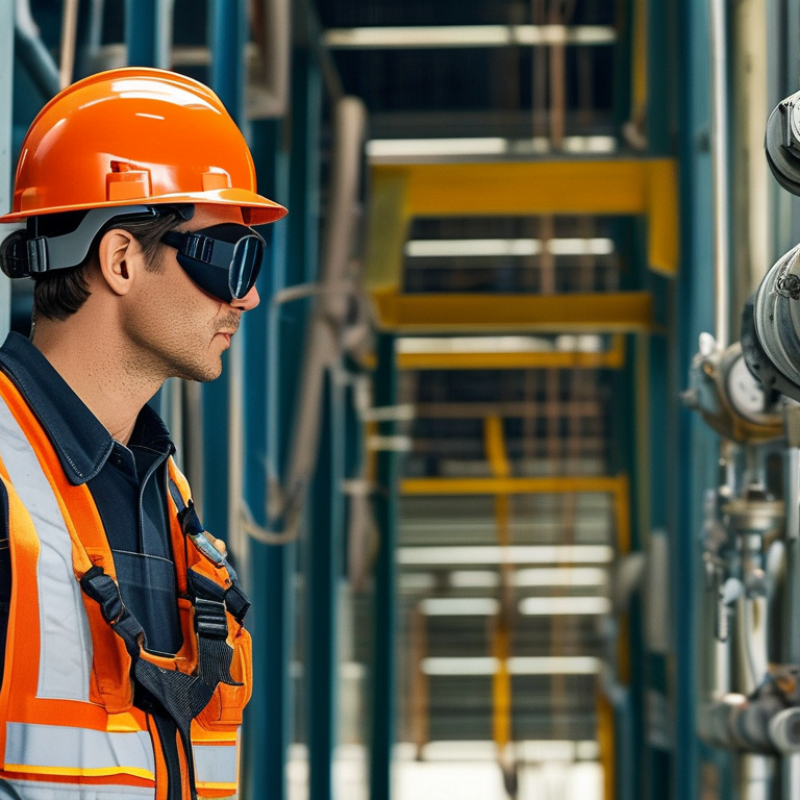
Choosing industrial safety equipment should begin with the hazard, not the product catalogue. ISO 12100 offers a practical risk-reduction hierarchy for this decision. Identify hazards such as rotating shafts, pinch points, hot surfaces, noise, dust, and stored energy. Then estimate exposure, severity, and the possibility of avoidance. A bright warning label cannot control an unguarded drive belt.
Apply inherently safe design whenever possible. Reduce speed, force, temperature, or access during the design stage. Add fixed or interlocked guards when hazards remain. Use protective equipment only after engineering and administrative controls are considered. Face shields, hearing protection, gloves, and respirators may reduce residual risk, but they depend on correct selection, fit, training, and maintenance. Small details matter. A loose glove near rotating machinery can create a new hazard.
Tips: Walk through the work area during normal production and cleaning. Speak with operators; they often notice awkward reaches and repeated exposures first. Record each hazard, chosen control, inspection interval, and responsible person. Check equipment against relevant standards and regional requirements, using current technical documentation. Do not treat certification as proof of suitability for every task. Reassess after process changes. I have found that risk reviews can miss maintenance activities, especially when machines appear safe during normal operation. Reflect on those gaps. Safety decisions should remain evidence-based, documented, and open to correction.
Choosing industrial safety equipment starts with the hazard, not the product shelf. OSHA 29 CFR 1910.132 requires employers to assess workplace risks and select suitable personal protective equipment. The assessment should examine impact, chemicals, heat, noise, electricity, visibility, and falling objects. A written record helps prove that decisions were deliberate.
Match each risk to a PPE category. Use protective eyewear meeting applicable ANSI/ISEA criteria for flying particles or liquid splashes. Select head protection based on impact and electrical exposure. Gloves require careful matching to cuts, punctures, heat, or chemical contact. Safety footwear should reflect crushing, slipping, puncture, and electrical hazards. Hearing protection needs noise measurements, not guesswork. Respiratory equipment demands medical evaluation, fit testing, and a suitable protection program.
Fit matters every day. A loose goggle can fog, while an oversized glove may catch on moving equipment. Inspect seams, lenses, straps, and soles before each shift. Replace damaged equipment promptly. Training must cover limitations, cleaning, storage, and correct adjustment. ANSI/ISEA standards describe performance criteria, but they do not replace the OSHA hazard assessment. Standards also change, so confirm the edition and application before purchasing. In practice, selection errors often happen when workers choose comfort alone. Comfort matters, but it cannot hide poor protection. Even experienced teams miss small hazards during busy maintenance work. Recheck the assessment after process changes, new chemicals, incidents, or worker feedback.
| Hazard Area | Typical PPE Category | OSHA 29 CFR 1910.132 Alignment | Relevant ANSI/ISEA Criteria | Selection and Performance Considerations | Employer Program Controls |
|---|---|---|---|---|---|
| Eye hazards from flying particles, dust, chemicals, or liquid splashes | Eye and Face Protection | Required when employees may be exposed to eye or face hazards. PPE must be selected based on the hazard assessment and must provide adequate protection. | ANSI/ISEA Z87.1, American National Standard for Occupational and Educational Personal Eye and Face Protection Devices | Use safety spectacles for impact hazards, chemical-splash goggles for liquid hazards, and face shields when face coverage is needed. A face shield generally supplements, rather than replaces, suitable primary eye protection. | Provide equipment at no cost where required by OSHA, ensure proper fit, inspect for damage, clean and maintain it, and train employees on limitations and use. |
| Noise at or above permissible exposure limits or elevated task-specific levels | Hearing Protection | 1910.132 applies to PPE selection and use. Hearing conservation requirements are primarily addressed under 29 CFR 1910.95 when employee exposure reaches the applicable action level. | ANSI/ASA S3.19 for laboratory attenuation methods and ANSI/ASA S12.6 for hearing protector attenuation evaluation methods. Noise exposure requirements are also governed by OSHA 29 CFR 1910.95. | Select earplugs, earmuffs, or dual protection according to measured exposure, compatibility with other PPE, communication needs, and the protector’s attenuation rating. Fit testing is useful for verifying real-world protection. | Conduct noise monitoring, implement a hearing conservation program when required, provide training, maintain hearing protectors, and evaluate attenuation rather than relying only on a labeled rating. |
| Hand cuts, punctures, abrasions, chemical contact, heat, or cold | Hand Protection | 29 CFR 1910.138 requires appropriate hand protection when hands are exposed to hazards such as skin absorption, severe cuts or lacerations, severe abrasions, punctures, chemical burns, thermal burns, or harmful temperature extremes. | ANSI/ISEA 105, American National Standard for Performance and Classification for Chemical Protective Clothing and Gloves | Match glove material and design to the specific chemical, concentration, contact time, temperature, cut risk, puncture risk, and required dexterity. No glove protects against every chemical or task hazard. | Use safety data sheets and manufacturer chemical-resistance data, assess breakthrough and permeation concerns, inspect gloves before use, replace contaminated or damaged gloves, and train employees in limitations and removal procedures. |
| Falling objects, struck-by hazards, electrical contact, or overhead work | Head Protection | 1910.135 requires protective helmets when employees are exposed to potential head injury from falling objects. Electrical protective requirements apply when the hazard assessment identifies electrical exposure. | ANSI/ISEA Z89.1, American National Standard for Industrial Head Protection | Select the appropriate helmet type and class for the hazard. Consider top impact, lateral impact where applicable, electrical classification, chin-strap needs, accessory compatibility, and the manufacturer’s service-life instructions. | Inspect shells, suspension systems, and accessories before use; remove damaged helmets from service; do not drill or modify helmets; store them away from damaging heat, chemicals, and sunlight. |
| Foot impact, compression, puncture, electrical hazards, or wet and slippery surfaces | Foot Protection | 1910.136 requires protective footwear when employees face hazards that could cause foot injuries, including falling or rolling objects, objects piercing the sole, electrical hazards, or other recognized hazards. | ASTM F2412 and ASTM F2413 establish test methods and performance requirements for protective footwear. OSHA 1910.136 references protective footwear meeting applicable consensus standards. | Select protection for impact, compression, puncture resistance, electrical hazard resistance, conductive properties, metatarsal protection, or slip resistance as identified by the assessment. Ensure correct size and compatibility with the work environment. | Inspect soles, uppers, toe protection, and closures; replace footwear that no longer provides protection; keep footwear clean and dry; and address ergonomic or fatigue concerns during selection. |
| Welding arc radiation, ultraviolet or infrared radiation, molten metal, sparks, and hot work | Welding and Hot-Work PPE | 1910.132 requires PPE to be selected from the hazard assessment. Additional OSHA requirements may apply under 29 CFR 1910.252 for welding, cutting, and brazing operations. | ANSI Z49.1 provides safety guidance for welding, cutting, and allied processes. ANSI/ISEA Z87.1 applies to protective lenses and eye and face devices used for occupational hazards. | Select the correct filter shade for the process and current, use suitable welding helmets or face protection, and combine them with safety glasses when required. Add flame-resistant clothing, gloves, sleeves, and footwear for sparks and molten-metal exposure. | Inspect lenses, helmets, clothing, gloves, and ventilation controls; protect nearby workers with screens; remove combustible materials where required; and train workers in radiation, fire, fume, and burn hazards. |
| Respirable dusts, fumes, mists, vapors, gases, or oxygen-deficient atmospheres | Respiratory Protection | Respiratory protection is primarily governed by 29 CFR 1910.134. Respirators must be used under a written respiratory protection program when engineering or work-practice controls do not adequately control exposure. | NIOSH certification requirements apply to respirators approved for occupational use. ANSI/ISEA Z88.2 provides recognized practices for respiratory protection program administration but does not replace OSHA requirements. | Select the respirator based on the contaminant, concentration, oxygen level, exposure limit, cartridge or filter limitations, required protection factor, and work conditions. Supplied-air or self-contained breathing apparatus may be required for oxygen-deficient or immediately dangerous atmospheres. | Provide medical evaluation, fit testing for tight-fitting respirators, user seal checks, training, cleaning, maintenance, cartridge-change procedures, and program evaluation. Facial hair or other conditions must not interfere with the seal. |
| Falls from elevated work surfaces, leading edges, roofs, platforms, or open-sided structures | Fall Protection | 1910.132 applies to PPE selection where personal protective equipment is used. General industry fall-protection requirements are primarily addressed under 29 CFR 1910.28 and 1910.140. | ANSI/ASSP Z359 series, including criteria addressing personal fall-arrest systems, harnesses, connecting devices, and rescue planning. | Select a complete compatible system, including anchorage, body support, connecting device, and appropriate clearance. Consider maximum arrest forces, swing-fall hazards, sharp edges, suspension trauma, rescue access, and equipment-specific limitations. | Inspect before each use, remove equipment from service after a fall or when defective, ensure anchorage suitability, provide training, maintain fall-clearance calculations, and establish prompt rescue procedures. |
| Body exposure to chemicals, flash fire, molten substances, infectious materials, or contamination | Protective Clothing | 1910.132 requires protective clothing and other PPE when the hazard assessment identifies a risk to the body. Chemical-specific OSHA standards may impose additional requirements. | ANSI/ISEA 105 for chemical protective gloves and clothing classification; ASTM and NFPA standards may also apply depending on chemical, flame, arc-flash, or biological hazards. | Define the required protection zone and select garments based on permeation, penetration, degradation, thermal exposure, flame resistance, seam construction, closure design, and decontamination requirements. | Establish donning and doffing procedures, inspect seams and closures, segregate contaminated clothing, provide laundering or disposal controls, and train employees to recognize breakthrough, contamination, and garment limitations. |
| Electrical shock, arc flash, arc blast, and thermal exposure | Electrical PPE | 1910.132 requires hazard-based PPE selection. Electrical safety work practices and PPE requirements are also addressed under 29 CFR 1910.331–1910.335 and other applicable OSHA provisions. | ASTM F1506 for arc-rated clothing; ASTM F2178 for arc-rating test methods for face protective products; ASTM F696 for electrical insulating footwear; ASTM D120 for rubber insulating gloves; and NFPA 70E for electrical safe-work practices. | Determine shock and arc-flash boundaries, incident energy, voltage rating, arc rating, glove class, insulating equipment needs, and compatibility with other PPE. Arc-rated clothing is selected for thermal exposure and is not a substitute for shock protection. | Inspect and test insulating equipment as required, maintain protective clothing and gloves, control conductive articles, establish approach boundaries, provide qualified-person training, and document required electrical safety procedures. |
Noise and hand hazards demand measurable protection targets, not vague claims. NIOSH recommends an 85 dBA eight-hour exposure limit, using a 3 dB exchange rate. OSHA’s hearing-conservation action level is also 85 dBA as an eight-hour time-weighted average. A noisy press line can exceed this level quickly. Measure the worker’s actual exposure before selecting hearing protection.
NRR helps compare hearing protectors under laboratory conditions. OSHA’s field method subtracts 7 from the labeled NRR, then divides the result by two. For example, a 29 dB NRR becomes an estimated 11 dB reduction. This estimate is imperfect. Poor fit, facial hair, communication needs, and simultaneous protectors can change real performance. APF gives another control point for respirators. Under OSHA 1910.134, a half-mask air-purifying respirator commonly has an APF of 10, while a full-face respirator has an APF of 50. Fit testing remains essential.
For gloves, EN 388:2016+A1:2018 reports abrasion, cut, tear, puncture, and optional impact performance. Abrasion uses levels 1–4, while the ISO cut test uses levels A–F. A high abrasion score does not guarantee strong puncture resistance. That mistake appears often in purchasing reviews. Match each rating to the task: sharp sheet metal, oily handling, repeated friction, or impact exposure. Keep the test certificate, inspection date, and replacement trigger with the equipment record. Standards guide decisions, but workplace observations must challenge the paperwork.
Before purchasing industrial safety equipment, verify the approval route for your operating market. CE marking confirms that the manufacturer declares conformity with applicable European requirements. It is not always proof of independent laboratory testing. UKCA serves a similar function under relevant United Kingdom rules, including applicable transition arrangements. For equipment used in the United States, an NRTL certification usually shows that an OSHA-recognized laboratory tested the product against specified safety standards.
Do not accept a logo alone. Request the declaration of conformity, certificate number, tested model, applicable standard, and certificate validity. Check whether accessories, voltage, enclosure rating, and installation conditions match your purchase order. A certificate for one control panel may not cover its modified version. That detail is often missed. The U.S. Nationally Recognized Testing Laboratory program emphasizes certification by recognized laboratories, not informal supplier claims. Verify the laboratory through official accreditation records.
3M The risk is measurable. The International Labour Organization estimated nearly three million work-related deaths annually, with about 395 million non-fatal occupational injuries. Certification cannot remove every hazard, but it can reduce avoidable uncertainty. Ask for evidence before shipment, then repeat the check when equipment arrives. A clean document file can still hide a specification mismatch. Procurement teams should record serial numbers, inspection dates, and limitations. I would also challenge “equivalent” substitutions unless engineering staff approve them in writing. That extra review may feel slow. It is usually cheaper than correcting an unsafe installation.
Choosing industrial safety equipment standards starts with the hazard, not the catalogue. Under ISO 45001, organizations should identify risks, define operational controls, and verify competence before issuing equipment. The International Labour Organization estimated 2.93 million work-related deaths globally in 2019. That figure makes “good enough” a weak purchasing argument. Fit must be proven on the worker, during the task, and with compatible equipment. A respirator seal check, harness adjustment, or glove dexterity trial can expose failures that paperwork misses. Small details matter.
Training records should show who was trained, on which equipment, by whom, and when refresher practice is due. ISO 45001 requires documented information supporting competence and operational control, but a signed attendance sheet cannot prove understanding. Ask workers to demonstrate inspection steps, emergency removal, and storage conditions. The U.S. Bureau of Labor Statistics recorded about 2.6 million nonfatal workplace injuries and illnesses in private industry during 2023. PPE is not always the root cause, yet poor selection and inconsistent use can increase exposure. This needs honesty.
Inspection criteria should be visible and practical. Define pre-use checks, competent-person reviews, defect tags, replacement triggers, and retention periods. The European Agency for Safety and Health at Work emphasizes worker participation and risk assessment, not equipment alone. Review records after near misses, failed fit tests, or repeated damage. Do not assume zero findings means zero risk. Our audits sometimes find excellent forms and weak conversations. That is a warning. Choose standards workers can apply under heat, noise, gloves, and time pressure. Then sample evidence in the field, not only in the filing system.
: Start with the hazard, not the product catalogue. Identify rotating shafts, pinch points, heat, noise, dust, and stored energy.
Reduce the hazard through design first. Add guards or interlocks next. Use PPE for remaining risk.
PPE depends on fit, training, inspection, and maintenance. A loose glove may catch near rotating machinery.
Review impact, chemicals, heat, noise, electricity, visibility, falling objects, and exposure duration. Record each decision clearly.
Match protection to flying particles, liquid splashes, heat, or other identified hazards. Inspect lenses before every shift.
Select gloves for cuts, punctures, heat, or chemical contact. Choose footwear for crushing, slipping, punctures, or electrical risks.
Hearing protection requires measured noise levels. Respiratory protection needs medical evaluation, fit testing, and a suitable program.
Reassess after process changes, new chemicals, incidents, or worker feedback. Maintenance tasks deserve special attention.
No. Certification shows performance against specified criteria. It does not replace a task-specific hazard assessment.
Walk through production and cleaning areas. Speak with operators. They may notice awkward reaches or repeated exposure first.
Check goggles, straps, seams, gloves, soles, guards, and adjustment points. Replace damaged equipment promptly.
No. Comfort supports consistent use, but it cannot compensate for poor protection. This is easy to overlook.
Choosing the right industrial safety equipment begins with understanding the hazards present in each workplace. ISO 12100’s risk-reduction hierarchy provides a practical foundation by prioritizing hazard elimination, engineering controls, administrative measures, and personal protective equipment. To determine what standards apply to industrial safety equipment, employers should align PPE categories with applicable workplace safety requirements and recognized performance criteria. Protection targets should also be measurable, using indicators such as noise reduction ratings, assigned protection factors, and cut, abrasion, tear, and puncture resistance ratings for protective gloves and clothing.
Before purchasing equipment, organizations should verify relevant conformity markings and independent certification, including CE, UKCA, or NRTL approval where applicable. Effective protection also depends on proper sizing, fit testing, user training, routine inspection, maintenance, and replacement procedures. Finally, accurate records should be maintained as part of an ISO 45001-based safety management system, helping demonstrate that equipment remains suitable, workers understand its correct use, and controls continue to reduce risk over time.

Agonex Safety