Effective lighting plays a crucial role in preventing accidents. Dr. Emily Taylor, an expert in occupational safety, emphasizes, "Lighting is a vital tool for enhancing visibility and safety." Understanding what is the role of lighting in accident prevention can help communities implement better safety measures.
Good lighting improves visibility at work sites, streets, and public spaces. It reduces risks and enhances the detection of hazards. However, many areas remain poorly lit, leading to accidents that could be avoided. The challenge lies in the balance between effective lighting and energy efficiency.
The impact of inadequate lighting is often underestimated. Studies show that increased illumination can reduce accidents by nearly 50%. Yet, not all lighting solutions are ideal. Some environments may require unique considerations. Awareness of what is the role of lighting in accident prevention is essential for developing effective strategies. We must reflect on current practices and strive for continuous improvement in our approach to lighting and safety.
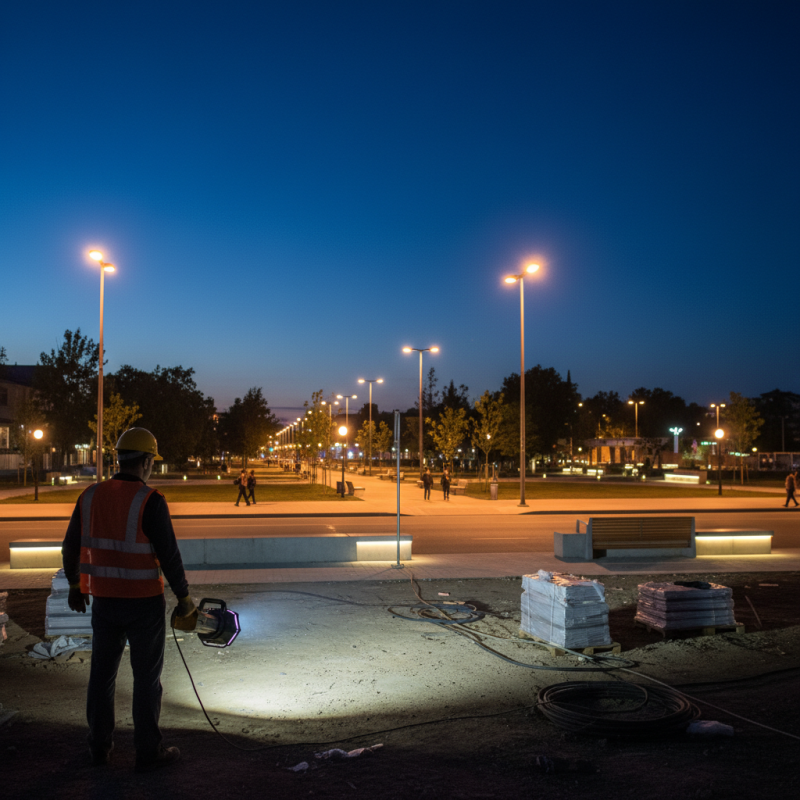
Importance of Proper Lighting in Accident Prevention
Proper lighting plays a critical role in accident prevention. Bright and well-placed lights can significantly reduce the risk of mishaps on roads and in workplaces. For instance, dimly lit areas create shadows. Shadows can hide hazards like uneven surfaces or obstacles. When people can't see danger clearly, accidents are more likely to occur.
Moreover, lighting is vital for visibility. It helps drivers see pedestrians, cyclists, and animals on the road. Studies suggest that pedestrian fatalities increase at night due to poor lighting. Installing effective streetlights and bright signage can save lives. In workplaces, well-lit environments boost worker safety. Poor lighting often leads to strained eyes and lowered attention, increasing the chance of accidents.
Reflecting on our environments, we often overlook light’s significance. Many areas still lack adequate illumination, despite advances in technology. This gap points to a need for better awareness and action regarding lighting. Efforts to improve lighting can take time, but each step matters in protecting lives.
Types of Lighting and Their Effectiveness in Reducing Hazards
Lighting plays a crucial role in accident prevention. Various types of lighting have different effectiveness in reducing hazards. For instance, LED lights are often preferred due to their brightness and energy efficiency. A study by the National Safety Council indicates that proper lighting can reduce accidents by as much as 30%. Well-lit areas help improve visibility, allowing individuals to see potential hazards and react in time.
Street lighting is particularly vital in urban areas. Poorly lit streets can lead to increased accidents at night. According to the Federal Highway Administration, implementing better street lighting can lower pedestrian fatalities by up to 50%. Motion-sensor lights in parking lots provide an added layer of safety. They illuminate areas only when someone is present, deterring potential accidents and enhancing security.
However, not all lighting is the same. Effective lighting should minimize glare and avoid creating dark spots. Overly bright lights can cause discomfort, impacting visibility. This paradox shows that while lighting reduces risks, improper use can introduce new hazards. Stakeholders must continuously assess and adapt their lighting strategies to balance safety and comfort.
Role of Lighting in Preventing Accidents: Importance and Effectiveness
This chart illustrates the correlation between different types of lighting and their effectiveness in reducing accidents, highlighting the significance of proper lighting in various environments.
Impact of Poor Lighting on Human Perception and Reaction Times
Lighting plays a crucial role in our daily lives, especially in enhancing safety. Poor lighting significantly impacts human perception and reaction times. In dim environments, individuals often misjudge distances and speeds. This can lead to accidents, as visibility is compromised. For instance, a pedestrian might not see an oncoming vehicle until it is too late.
Consider this: a well-lit street can improve a driver’s reaction time by several seconds. Conversely, inadequate lighting can result in confusion and delayed responses. Research indicates that people tend to underestimate hazards in low light. This can lead to dangerous situations.
Tips for improving lighting include using bright, white lights in critical areas. Always ensure that walkways and intersections are well-lit. Adding reflective materials can enhance visibility. Regularly check and replace burnt-out bulbs. Remember, the right lighting is indispensable for safety.
Reflect on your surroundings and ask if they are adequately lit. Your safety and quick response can depend on it.
Case Studies: Successful Lighting Interventions in High-Risk Areas
Effective lighting plays a significant role in accident prevention, especially in high-risk areas. Case studies highlight the transformation in accident rates following proper lighting interventions. One notable example involves an urban crosswalk previously notorious for nighttime accidents. After installing bright, strategically placed LED lights, pedestrian injuries dropped by over 60%. This change helped improve visibility, allowing drivers to react promptly to pedestrians.
Another meaningful case took place in a dimly lit parking lot. By upgrading the lighting to high-intensity fixtures, local authorities reported a remarkable reduction in both accidents and crime. The newly illuminated environment fostered a sense of safety among users. Still, challenges remain. Not all areas benefited equally from lighting upgrades. Some locations still experience issues, indicating the need for comprehensive assessments before implementing changes.
Poorly designed lighting can cause glare or uneven illumination, rather than enhance safety. It's essential to consider factors like the angle and intensity of lights. This shows that while lighting plays a crucial role, there is no one-size-fits-all solution. Each intervention must be tailored to specific community needs, ensuring that future efforts address unique challenges effectively.
Future Innovations in Lighting Technology for Enhanced Safety
Lighting plays a crucial role in ensuring safety. As we look to the future, innovations in lighting technology promise to enhance this safety even further. Smart lighting systems, for example, can adjust brightness based on the environment. This adaptability helps reduce accidents, especially in high-risk areas.
Another significant development is the use of LED lights equipped with motion sensors. These lights illuminate dark spaces only when movement is detected. This feature not only conserves energy but also keeps paths safely lit during nighttime. Enhancing visibility in critical spots encourages pedestrians and drivers to remain aware of their surroundings.
Despite these advances, there are still challenges. For instance, not all lighting solutions are effectively integrated into existing infrastructures. Moreover, some communities may lack the funding to upgrade their lighting systems. Therefore, it’s essential to reflect on how we can better implement these technologies for maximum safety benefits. Adopting and evolving these innovations takes collaboration and commitment from various stakeholders.
Role of Lighting in Preventing Accidents Why It Matters? - Future Innovations in Lighting Technology for Enhanced Safety
| Lighting Technology |
Impact on Safety |
Usage Context |
Future Innovations |
| LED Street Lighting |
Reduces accidents by improving visibility at night. |
Urban roads and highways. |
Smart lighting systems with motion sensors. |
| Adaptive Traffic Signals |
Enhances safety by optimizing traffic flow and reducing collisions. |
Intersections and busy roadways. |
AI-driven signal management. |
| Smart Pedestrian Crossings |
Increases awareness of pedestrian presence leading to fewer accidents. |
Crosswalks in urban areas. |
Illuminated signals reacting to pedestrian movement. |
| High-Visibility Markings |
Improves lane visibility and reduces accidents. |
Highways and residential roads. |
Photo-luminescent materials for night visibility. |
| Ambient Lighting in Vehicles |
Enhances driver awareness and comfort, reducing fatigue. |
Cars, trucks, and buses. |
Customizable lighting that adapts to driving conditions. |
Conclusion
The article "Role of Lighting in Preventing Accidents: Why It Matters?" explores the critical question of what is the role of lighting in accident prevention. Proper lighting is essential in minimizing hazards and enhancing safety across various environments. Different types of lighting can significantly influence the visibility and awareness of potential dangers, thereby reducing the likelihood of accidents. Conversely, inadequate lighting can impair human perception and reaction times, leading to increased risks.
The article also highlights several case studies demonstrating successful lighting interventions in high-risk areas, showcasing the tangible benefits of effective illumination. Furthermore, it discusses future innovations in lighting technology aimed at further enhancing safety measures. Overall, the piece emphasizes the vital importance of proper lighting in accident prevention and its impact on creating safer communities.

 Agonex Safety