When buyers ask which standards safety equipment meets, they are seeking more than a certificate or a familiar logo. They want evidence that the equipment can perform under real working conditions. A hard hat may face falling tools, heat, moisture, or repeated impact. Gloves may need resistance to cuts, chemicals, punctures, or abrasion. These risks require different testing methods, materials, and performance limits. The right question is not simply which standards should safety equipment meet, but which recognized requirements match the specific hazard, workplace, and user.
Experienced safety teams examine product labels, test reports, manufacturer instructions, and certification records. They also check whether the equipment fits properly and remains usable during long shifts. A compliant product can still fail when workers cannot see through its face shield or remove its gloves safely. That detail is easy to overlook. Reliable suppliers should explain the testing scope, date, laboratory, and product model covered by each claim. Buyers should also confirm local regulatory expectations before purchasing, because requirements can differ between countries, industries, and applications. Standards are valuable, but they are not a substitute for risk assessment. That assumption is convenient, but incomplete. In practice, buyers need clear documentation, honest limitations, and equipment that workers will actually wear. Good decisions come from comparing evidence with the job, not choosing the most impressive label.
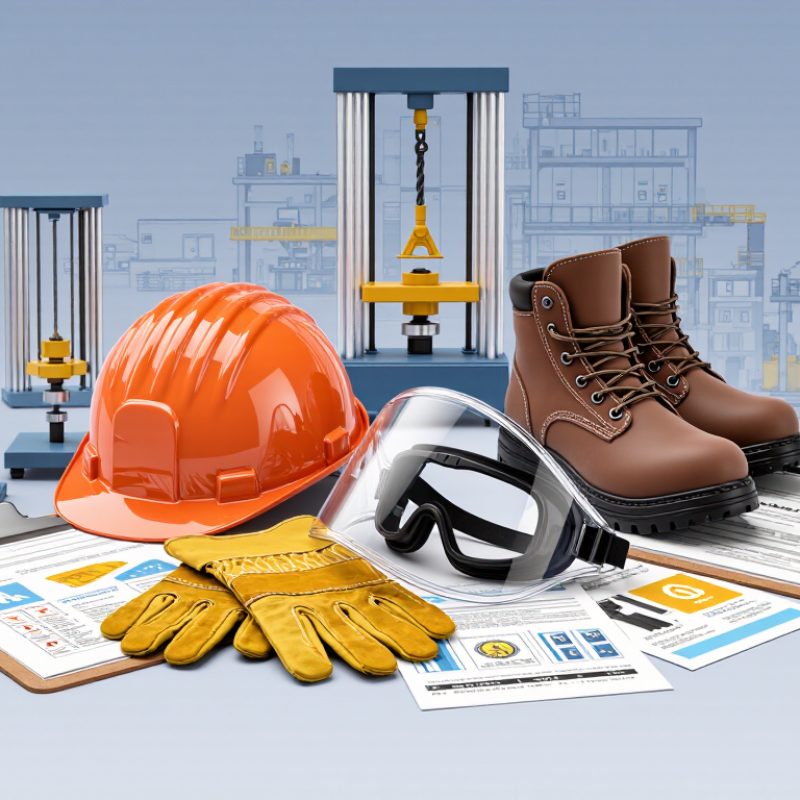
Buyers ask which standards safety equipment meets because a product’s appearance cannot reveal its protective performance. Standards define how equipment is tested, what hazards it addresses, and where its limits begin. A certified helmet, glove, or face shield has usually passed specific tests under controlled conditions. That evidence gives purchasing teams a more reliable basis for comparison.
In practice, I check the standard number, testing scope, product model, and issue date. I also review technical files, conformity statements, and independent laboratory reports. A standard may cover impact resistance but say little about chemical exposure or heat. The same product may perform differently when worn incorrectly, modified, or used beyond its rated conditions. Fit still matters. A respirator that leaks around the face cannot provide its expected protection. Gloves can reduce dexterity, causing workers to handle tools less safely.
Standards support sound purchasing, but they do not replace a workplace risk assessment. Buyers should match test results with actual tasks, exposure duration, temperature, movement, and maintenance practices. Paperwork is not protection. Storage records, inspection routines, training, and replacement schedules also affect performance. I have seen teams compare certificates carefully, then overlook whether workers could comfortably wear the equipment for an entire shift. That is an easy mistake, and it deserves another review. When requirements are unclear, a qualified safety professional and the relevant official standards body can help confirm the equipment’s intended use and current compliance.
When buyers ask which standards safety equipment meets, they are testing more than a sales claim. In procurement reviews, I check the exact standard number, edition, and product scope. Certification confirms an assessment by an approved body. Testing shows how a sample performed under defined conditions. Compliance connects the product with applicable requirements. These terms overlap, but they are not interchangeable.
A credible comparison includes the testing laboratory, report date, methods used, and stated limitations. A helmet may pass impact testing but lack evidence for heat or chemical exposure. That missing detail can change a purchasing decision. Ask whether the tested sample matches the current production model. It sounds basic. It is often missed. Requirements may also differ by country, workplace, or intended use.
Buyers should compare test conditions, certificate validity, renewal procedures, and supplier quality controls.
A statement saying “meets the standard” does not automatically prove suitability.
Request declarations, certificates, test reports, and product traceability records. Keep unresolved questions visible during review. If evidence is incomplete, mark the claim as unverified rather than assuming it is acceptable. This takes longer, but it supports a more reliable decision. Even experienced teams can overlook a small scope restriction.
Why Do Buyers Ask Which Standards Safety Equipment Meets?
Standards influence equipment quality, performance, and reliability in ways buyers can verify. They define testing methods, material expectations, protective limits, and production controls. This matters when equipment faces heat, impact, chemicals, dust, or repeated daily use. A helmet may look strong, yet its tested impact performance tells a clearer story. Gloves also need suitable resistance, flexibility, and secure stitching. Small weaknesses can become serious during routine work.
Tips: Ask for the exact standard and edition. Check test reports, product markings, and declared performance levels. Compare the standard with the actual workplace hazard. A certified product may still be unsuitable if its rating does not match the task. Fit matters too. Poorly fitted equipment can reduce protection and encourage unsafe adjustments.
Reliability also depends on maintenance, storage, inspection, and replacement schedules. Standards cannot control every real-world condition. Moisture, sunlight, contamination, and careless storage may reduce performance over time. A practical review should examine both documentation and physical construction. Look for consistent seams, clear instructions, durable materials, and traceable quality records. It is easy to trust a certificate too quickly. That assumption deserves another check. Buyers who combine verified standards with workplace observation make more dependable decisions.
Safety standards define the laboratory tests, performance limits, marking rules, and quality controls that protective equipment must meet. Buyers ask about compliance because a recognized standard provides a consistent basis for comparing impact resistance, optical performance, durability, and reliability across products without relying only on manufacturer claims.
Buyers ask which standards safety equipment meets because a label alone does not explain protection. Industry rules set minimum performance levels, while workplace risks determine what workers actually need. A helmet used near falling objects faces different demands from one used around electrical tasks. Gloves for sharp metal may fail against chemical exposure. The setting matters.
During site reviews, I have seen equipment chosen by price rather than risk. That decision often looks reasonable until sparks reach a sleeve or a wet floor weakens footwear grip. Noise, heat, dust, poor lighting, and repeated movement also affect equipment selection. Reliable buyers check current regulations, hazard assessments, technical files, test results, and user instructions. They also confirm whether the equipment fits local workplace requirements. Standards are not interchangeable. Sometimes, the paperwork is incomplete. That should trigger questions, not assumptions.
Tips: Match each item to a documented hazard. Ask who tested it, under which standard, and when. Check sizing with real workers, including winter clothing or protective layers. Replace damaged equipment quickly. Review selections after incidents, near misses, or process changes. A practical trial can reveal problems that a certificate cannot. Workers may report fogging, pressure points, or restricted movement. Those details are easy to dismiss, but they often decide whether protection is worn correctly. My own reviews have occasionally focused too heavily on certification, missing comfort and task speed. That is worth reconsidering.
Why Do Buyers Ask Which Standards Safety Equipment Meets?
Before purchasing certified safety equipment, buyers should verify the exact standard, not just the word “certified.” Standards address different hazards, work conditions, and performance limits. A helmet tested for impact may not protect against electrical contact. Gloves suitable for chemicals may fail under sharp-edge testing.
Check the certificate number, issuing organization, test date, and product model. The model must match the equipment in your hands. Ask for the test report or declaration of conformity when available. Confirm that the testing body has suitable accreditation and that the certificate covers the intended use. A supplier’s website is useful, but it is not enough evidence. Paperwork matters.
Look closely at the markings and user instructions. They should explain size, protection level, limitations, cleaning, storage, and replacement conditions. Inspect packaging for damaged seals or unclear labels. Then compare these details with your workplace hazards. A dusty construction area, a laboratory bench, and a high-noise workshop need different checks. Fit also matters. Equipment that meets a standard can still fail in practice if workers cannot wear it correctly. That is easy to underestimate. Buyers should record verification steps and review them when standards or work conditions change. No certificate removes the need for judgment.
| Equipment Category | Common Applicable Standard | What the Standard Typically Addresses | Evidence Buyers Should Verify | Important Limitations and Purchasing Checks |
|---|---|---|---|---|
| Industrial Safety Helmets | ANSI/ISEA Z89.1 or EN 397 | Impact protection, penetration resistance, wearing conditions, and performance requirements for industrial head protection. | Check the permanent marking, standard edition, helmet type or class, size range, manufacture date, and user instructions. | A helmet certified for general industrial use may not provide protection against electrical hazards, lateral deformation, molten metal, or extreme temperatures unless specifically marked for those hazards. |
| Protective Eyewear | ANSI/ISEA Z87.1 or EN ISO 16321 | Impact resistance, optical quality, filtering performance, and protection from particles, liquids, radiation, or other specified hazards. | Verify lens and frame markings, impact rating, filter shade, coverage design, and whether the marking applies to the complete assembly. | Clear impact-rated eyewear is not automatically suitable for welding, ultraviolet radiation, infrared radiation, chemical splash, or laser hazards. |
| Protective Gloves | ANSI/ISEA 105 or EN 388 | Mechanical protection such as abrasion, cut, tear, puncture, and impact resistance, using rating systems that vary by standard. | Compare the individual performance ratings with the workplace risk assessment, and review the test method and rating scale used. | Cut resistance does not equal protection from needles, rotating machinery, chemicals, heat, or electrical shock. Glove selection must match the specific hazard. |
| Chemical-Resistant Gloves | EN ISO 374-1 | Resistance to permeation and degradation when exposed to specified chemicals under controlled laboratory conditions. | Request the chemical permeation data, breakthrough time, test chemicals, glove thickness, temperature conditions, and manufacturer’s compatibility guidance. | Laboratory test results do not guarantee protection against every mixture, concentration, temperature, or duration of workplace exposure. |
| Safety Footwear | ASTM F2413 or EN ISO 20345 | Protection against hazards such as toe impact and compression, with additional properties available for puncture resistance, electrical risks, slip resistance, or heat. | Verify the required toe protection, sole properties, puncture resistance, electrical classification, size, fit, and markings on the footwear. | Toe protection alone does not ensure chemical resistance, slip resistance, metatarsal protection, electrical insulation, or suitability for every work surface. |
| High-Visibility Garments | ANSI/ISEA 107 or EN ISO 20471 | Visibility performance, fluorescent background material, retroreflective material, garment design, and visibility class. | Confirm the garment class, background material area, retroreflective configuration, size, care instructions, and certification or conformity documentation. | High-visibility clothing is not automatically flame-resistant, arc-rated, waterproof, or suitable for traffic-control conditions without the relevant additional rating. |
| Protective Clothing | ISO 13688, with hazard-specific standards | General requirements for ergonomics, sizing, labeling, innocuousness, marking, and information supplied by the manufacturer. | Verify the hazard-specific standard in addition to the general clothing standard, along with garment classification, seam construction, and care instructions. | ISO 13688 is a general framework and normally should not be used alone to claim protection from chemicals, heat, flames, biological agents, or mechanical hazards. |
| Flame-Resistant or Arc-Rated Clothing | NFPA 2112, ASTM F1506, or IEC 61482-2 | Thermal protection performance for flash fire or electric-arc exposure, depending on the applicable standard and garment classification. | Check the arc rating or thermal performance result, garment system requirements, hazard assessment, labeling, and compatibility of all worn layers. | Flame-resistant fabric does not make clothing fireproof. Contamination, damage, incorrect layering, and open areas can reduce protection. |
| Particulate Respirators | NIOSH 42 CFR Part 84 or EN 149 | Filtration performance, breathing resistance, leakage-related requirements, and classification for particulate filtering respirators. | Verify the approval or conformity marking, respirator class, model identification, expiration information, packaging integrity, and user instructions. | Particulate respirators do not normally protect against gases or vapors. Fit testing, user seal checks, and an appropriate respiratory protection program may be required. |
| Hearing Protection | ANSI/ASA S3.19 or EN 352 | Acoustic attenuation and performance requirements for earplugs, earmuffs, and related hearing-protection devices. | Review the attenuation rating, test method, fit information, compatibility with other PPE, and whether the product is suitable for the measured noise exposure. | Laboratory attenuation may differ from real-world performance. Correct fitting, consistent use, and workplace noise assessment remain essential. |
| Fall-Arrest Harnesses and Connectors | ANSI/ASSP Z359 series or EN 361 and related standards | Design, strength, connection, energy absorption, and system-performance requirements for fall-arrest equipment. | Verify the complete system compatibility, attachment points, maximum user capacity, inspection status, serial or batch information, and required clearance. | A certified harness alone does not prevent injury. Anchorage strength, fall clearance, rescue planning, training, and inspection are also necessary. |
Certification confirms an approved body assessed the product. Testing shows sample performance under defined conditions. Compliance connects requirements with actual use. These terms overlap, but they are not interchangeable.
Check the laboratory, report date, test methods, sample identity, and stated limitations. Also verify the exact standard number and edition. Small details matter.
No. A helmet may pass impact testing but lack evidence for heat or chemical exposure. Review every relevant workplace hazard before purchasing.
Ask whether the tested sample matches the current production model. Request traceability records, declarations, certificates, and quality-control information. This basic check is often missed.
A certified product can still be unsuitable for a specific task. Gloves for sharp metal may not resist chemicals. The setting matters.
Consider falling objects, electrical tasks, noise, heat, dust, moisture, and repeated movement. A wet floor may reduce footwear grip. Poor lighting can affect safe use.
Examine seams, materials, markings, instructions, fit, and adjustment points. Try the equipment with real workers and protective layers. Comfort affects consistent use.
Yes. Sunlight, moisture, contamination, and careless storage may weaken equipment over time. Follow inspection, cleaning, storage, and replacement schedules.
Mark the claim as unverified and keep the question visible. Do not assume acceptance. More review may take longer, but it supports a stronger decision.
Workers may report fogging, pressure points, restricted movement, or slower task performance. Certificates cannot reveal everything. My reviews have sometimes trusted certification too quickly.
Buyers ask which standards safety equipment meets because standards provide a clear basis for judging whether protective products are suitable for real workplace conditions. They explain the level of protection, testing methods, material performance, durability, and use requirements an item must satisfy. When comparing equipment, buyers should distinguish between formal certification, independent testing, and general compliance claims, since each offers different evidence of quality and reliability. These details help organizations choose products that can perform consistently rather than relying only on appearance or price.
The right selection also depends on industry rules, job hazards, exposure levels, and the needs of the people using the equipment. Before purchasing, buyers should verify current certificates, test reports, product specifications, intended applications, maintenance instructions, and traceability information. Asking “which standards should safety equipment meet” encourages a careful evaluation of whether the equipment matches the risks, workplace procedures, and required performance expectations. This approach supports safer purchasing decisions and improves confidence in long-term protection.

Agonex Safety