Construction sites rarely stay still. A delivery truck can block a familiar route, a trench may open beside a walkway, or a crew may begin work near moving equipment. In these changing conditions, clear warnings help workers and visitors recognize hazards before they reach them. A sign, flashing beacon, barrier light, or audible alarm can make a risky area easier to identify.
So, why do construction sites use temporary warning systems? They provide visible, adaptable alerts when permanent safety measures are unavailable or site conditions change. Effective systems can guide people around an excavation, mark a low-light entrance, or signal vehicle movement near a loading zone. They also help site managers communicate hazards consistently. But equipment alone cannot prevent every incident. Placement, visibility, maintenance, and worker understanding matter just as much.
This guide introduces ten temporary warning system options available from Chinese suppliers and explains where each may be useful. It considers practical factors such as alert type, power source, portability, weather resistance, and ease of setup. These features can differ significantly between products, so specifications should be checked rather than assumed. A bright light may still be missed behind dust or glare. That deserves a second look.
The aim is not to treat any product as a universal solution. Instead, the comparisons offer a starting point for choosing alerts that fit a site’s layout, hazards, and daily routines. The right system should be easy to notice, simple to maintain, and suitable for the conditions where it will be used.
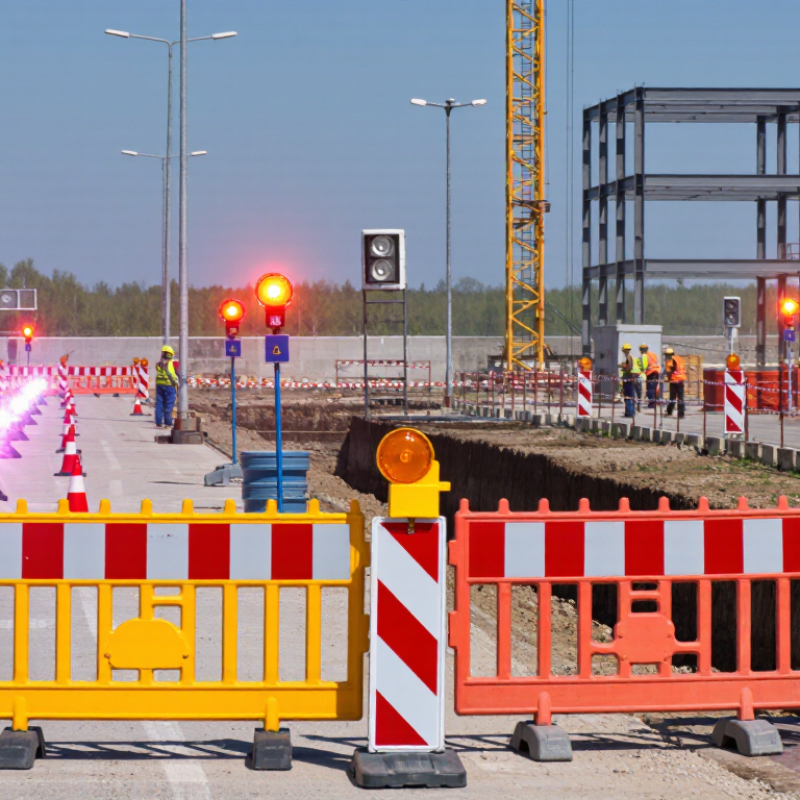
Temporary site warning systems are portable signs, lights, barriers, alarms, and marked routes that alert people to changing hazards. They are used where work zones move or conditions change too quickly for permanent warnings. The aim is simple: give workers and visitors time to notice a risk and choose a safer route.
On a road repair site, reflective signs and flashing lamps can make a lane closure visible before drivers reach cones and machinery. Inside a warehouse, temporary barriers and audible alerts can separate foot traffic from forklifts during maintenance. Utility crews may use signs and barricades around an open service area, while event teams mark restricted entrances and emergency paths. The equipment should suit the setting. A quiet indoor alarm may be missed outdoors, and a small sign can disappear behind a parked truck.
Good systems are checked as work progresses. Workers should confirm that signs face approaching traffic, lights remain visible in poor weather, and barriers have not shifted. Small details matter. Still, warnings cannot replace clear site planning or attentive people. A setup may look adequate from one angle and confusing from another; walking the route as a visitor can reveal gaps that a checklist misses.
China’s top ten temporary site warning systems are best understood as practical categories, not a single official ranking. Temporary traffic signs warn approaching drivers near work zones. LED arrow boards show lane changes in rain or dusk. Flashing beacons mark site entrances and sharp turns. Entry signal towers help separate vehicle and pedestrian movements. Audible alarms alert crews when visibility is blocked. Keep messages brief and lights visible from the actual approach. Small details count.
The other five are illuminated pedestrian barriers, reversing alarms, gas detectors with audible or visual alerts, weather and lightning alert systems, and wireless evacuation or public-address systems. The ILO’s 2019 report, Safety and Health at the Heart of the Future of Work, estimates 2.78 million work-related deaths and 374 million non-fatal injuries worldwide each year. That scale makes dependable warnings important, though equipment alone cannot prevent every incident. A gas detector needs regular checks; a beacon can be missed if it faces the wrong direction. Site teams should test signals during shift changes and record faults. False alarms still happen, and crews can become used to them. That deserves attention.
A practical comparison of common temporary warning systems by the number of distinct warning modalities typically used.
Visual, audible and tactile alerts can help make temporary work areas more noticeable. Counts show common modalities, not safety performance; actual features vary by equipment and site setup.
Temporary warning systems turn changing site conditions into clear, time-sensitive signals. Depending on the setup, radar or ultrasonic sensors can detect approaching vehicles, while wearable tags can help identify workers near moving equipment. Weather sensors may flag strong winds, rain, or poor visibility. A controller can then activate flashing beacons, audible alarms, message boards, or alerts sent to supervisors. The Federal Highway Administration recorded 891 work-zone fatalities in the United States in 2022. That figure does not prove warning systems prevent crashes, but it highlights the stakes of communicating hazards promptly.
No sensor sees everything. Buildings, parked equipment, dust, and network interruptions can create blind spots or delay alerts. Systems work best when detection zones, warning thresholds, and signal meanings match the actual site layout. A flashing light should be visible from an operator’s cab; an audible alarm should remain distinct from routine equipment noise. Human checks still matter, especially when temporary routes change during a shift.
Tips: Test alarms at shift start, mark sensor blind spots, and use distinct signals for vehicle movement and weather hazards. Keep a radio or other backup available. Review near misses regularly; thresholds may need adjustment as the site changes.
| System Type | Hazard Detected | How It Detects the Hazard | How It Communicates | Typical Temporary-Site Use | Important Consideration |
|---|---|---|---|---|---|
| Portable traffic signals | Conflicting vehicle movements through a temporary one-lane section | Timed control or vehicle detectors, such as inductive loops or radar, register traffic and help control signal phases. | Red, amber, and green signal aspects communicate when traffic must stop or proceed. | Roadworks, utility repairs, and temporary lane closures | Signal timing, visibility, queue length, and any required manual control should be assessed for the site. |
| Radar speed feedback signs | Vehicles approaching a work zone above a set speed threshold | Radar measures the speed of an approaching vehicle. | An electronic display shows the measured speed; some units also use warning lights or symbols. | Temporary roadworks and site access routes | A feedback sign informs drivers but does not physically slow or stop traffic. |
| Work-zone intrusion alarms | Unauthorized entry into a protected work area or vehicle incursion into a closed lane | Depending on the setup, radar, infrared, pressure-sensitive devices, or a physical barrier sensor detects movement or contact. | Local audible alarms, flashing lights, or wireless alerts notify workers or a site control point. | Road maintenance zones, restricted construction areas, and temporary exclusion zones | Sensor placement and alarm response procedures should account for false alarms and blind spots. |
| Portable gas detectors | Hazardous gases, oxygen deficiency, or oxygen enrichment, depending on the detector | Electrochemical, catalytic-bead, infrared, or other sensor types measure specific gases or oxygen levels. | A local display, audible alarm, vibration, or configured remote monitoring system communicates an alarm condition. | Confined-space work, excavation, tank maintenance, and temporary process areas | The detector must suit the target gas and be maintained, bump-tested, and calibrated according to its instructions and site procedures. |
| Water-level and flood alarms | Rising water or flooding in pits, excavations, sumps, and low-lying work areas | Float switches, conductive probes, or pressure-based level sensors detect water reaching a configured level. | A local siren or beacon sounds; some systems can send a remote notification through a connected communications network. | Excavations, temporary drainage systems, and areas at risk of water ingress | Alarm thresholds should allow enough time for workers to respond, and sensors should be checked for debris or damage. |
| Lightning and severe-weather warning systems | Nearby lightning activity or weather conditions that meet configured warning criteria | Systems may use electric-field measurements, lightning detection data, or weather information from a connected service. | Audible sirens, visual beacons, or messages to designated site personnel communicate alerts and all-clear notices. | Outdoor construction, events, and work involving cranes or exposed equipment | A warning system should support, not replace, a documented weather action plan and reliable shelter procedures. |
| Proximity warning systems | People or objects entering a defined detection zone around moving plant or vehicles | Depending on the design, radio-frequency tags, radar, ultrasonic sensors, or cameras identify nearby targets. | In-cab alarms, wearable alerts, or visual indicators warn operators and, in some configurations, workers on foot. | Construction sites, vehicle reversing areas, and material-handling zones | Detection performance varies with sensor type, positioning, obstructions, and site conditions; operators still need safe-work procedures. |
| Temporary fire detection and alarm systems | Smoke, heat, or other fire indicators covered by the installed detectors | Smoke detectors sense airborne combustion products; heat detectors respond to temperature or temperature rise, depending on type. | Sounders and visual alarm devices alert occupants; a control panel may indicate the initiating area. | Temporary buildings, refurbishment projects, and construction areas where permanent coverage is unavailable or changing | Coverage, audibility, system testing, and evacuation arrangements should reflect the changing site layout and applicable requirements. |
| Portable perimeter and access alarms | Entry through a temporary boundary, gate, or restricted access point | Magnetic contacts, infrared beams, motion sensors, or cable-based sensors detect an opening or movement across a monitored boundary. | A local siren or beacon alerts nearby personnel; networked systems may send a notification to a monitoring point. | Temporary fencing, equipment compounds, and after-hours site security | The alarm indicates a possible breach; it does not physically secure the perimeter or verify who entered. |
| Portable public-address and visual warning units | Emergency instructions or hazards requiring a clear site-wide warning | These units generally communicate an alert rather than detect a hazard; they may be activated manually or by an integrated alarm panel. | Voice messages, tones, flashing beacons, or combinations of audible and visual signals convey instructions. | Large, noisy, temporary work areas and sites with changing access routes or evacuation paths | Message clarity, background noise, device coverage, language needs, and backup power should be considered. |
Note: Detection methods and communication features vary by system configuration. Select, install, test, and operate temporary warning systems in accordance with the site risk assessment, manufacturer instructions, and applicable local requirements.
Temporary sites change quickly. A work area may move from a clear gravel lot to a crowded loading zone within days. Warning systems help workers, visitors, and delivery drivers notice hazards before entering them. They can signal reversing vehicles, restricted access, sudden equipment movement, or changing site conditions. Small signals matter.
An effective setup matches the warning to the risk. Audible alarms can be heard over machinery, while flashing lights help where noise makes speech difficult. Signs and barriers provide clear direction at entrances and along temporary routes. Place alerts where people can see or hear them in time to react, not behind stacked materials or parked vehicles. Weather complicates things.
On a busy site, a warning is useful only if people understand what it means. Keep messages simple, and explain alarm types during site inductions. Check devices after relocation, heavy rain, or changes to the work area. Record faults and assign someone to arrange repairs; a silent alarm can create false confidence. No setup is flawless, and that deserves regular thought. Workers should still follow safe procedures rather than relying on alerts alone.
Selecting a temporary site warning system starts with the hazards, not the equipment. Walk the site during a normal shift and note vehicle routes, blind corners, changing work zones, and noisy areas. A reversing truck near a pedestrian gate may need a different alert from a lifting zone with limited visibility. Choose signals workers can recognize quickly, such as flashing beacons, audible alarms, or both. In loud environments, sound alone may be missed. Check whether the system can move as the site layout changes, and confirm that its power source suits the expected shift length and weather. Small details matter. A beacon hidden behind stacked materials is not much use.
Deployment should be planned on a site map, then checked in person. Place warning devices where approaching workers can see or hear them before reaching a hazard, especially at entrances and blind approaches. Keep cables protected and equipment clear of vehicle paths. Test each alert from the places workers actually stand, not only beside the device. Test it twice. Ask workers whether the signal is clear amid machinery noise; their feedback can reveal gaps a desk plan misses. Assign someone to inspect batteries, mounts, and visibility at shift start and after layout changes. No setup stays perfect for long. Document faults and adjust placements as work progresses.
It uses portable signs, lights, barriers, alarms, and marked routes to show changing hazards. It helps people choose a safer path.
They are used on road repairs, in warehouses, around utility work, and at event sites. A parked truck can hide a small sign.
Reflective signs, flashing beacons, and LED arrow boards can show lane closures or turns. Check visibility from the approaching road.
Barriers, entry signals, and audible alarms can separate foot traffic from vehicles. Clear routes matter.
Radar or ultrasonic sensors can detect approaching vehicles. Weather sensors may flag strong wind, rain, or poor visibility.
No. Sensors can miss hazards behind buildings, parked equipment, or dust. Human checks still matter.
Check it as work progresses and at shift changes. Make sure signs face traffic, lights remain visible, and barriers have not moved.
Use distinct signals for different hazards, test alarms, and record faults. False alarms happen. Review them rather than ignoring them.
Temporary site warning systems are portable safety tools used at construction zones, roadworks, maintenance areas, and other short-term work locations. The top options in China can include portable alarms, flashing beacons, audible-and-visual signals, motion or proximity detectors, temporary traffic warning devices, and connected monitoring units. They help identify hazards such as moving equipment, restricted access, changing work conditions, or people entering unsafe areas. Depending on the setup, sensors detect activity and send alerts through lights, sounds, or remote notifications.
Why do construction sites use temporary warning systems? These systems make hazards easier to notice, help workers and visitors respond promptly, and support safer coordination when site conditions change. Choosing a suitable system means considering the hazard, site size, weather, power supply, visibility, sound levels, and ease of installation. Effective deployment also requires placing devices where alerts can be noticed, testing them regularly, and adjusting their positions as work progresses.

Agonex Safety